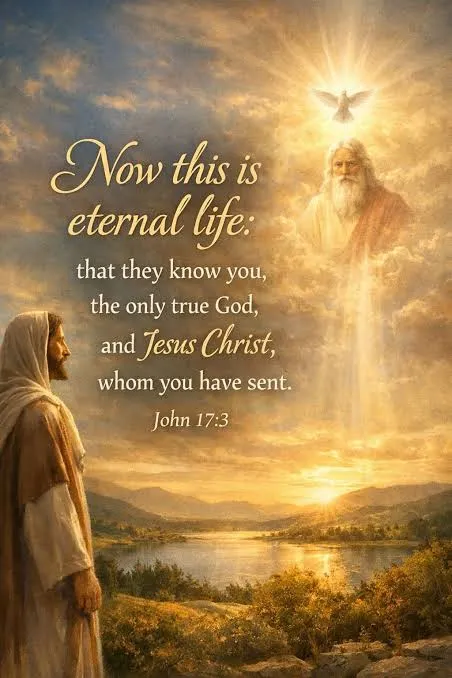
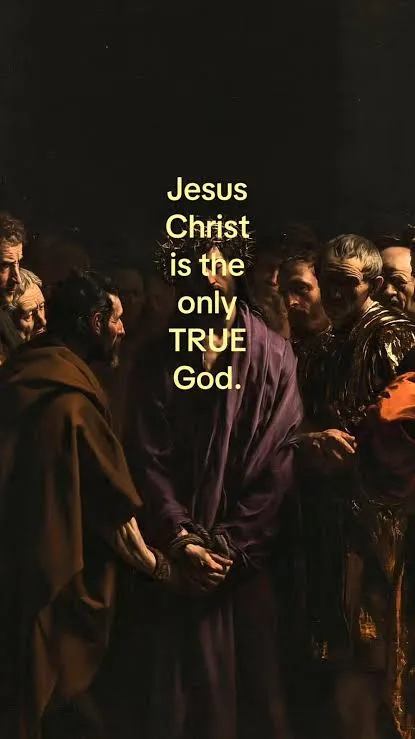
Many people say Jesus was a good teacher, a prophet or one of many paths to God. But Jesus never left that option open. Again and again, in the Gospel of John, He made claims no mere teacher would make. Seven times He said “I am,” each time followed by something only God could be. Here are those claims, and why they matter for anyone who wonders who Jesus really is.
The name behind the words
When Moses asked God His name at the burning bush, the answer was:
“I AM THAT I AM: and he said, Thus shalt thou say unto the children of Israel, I AM hath sent me unto you.” (Exodus 3:14)
“I AM” was the name of the eternal, self-existent God of Israel. Then, standing in the temple, Jesus said something that made His listeners pick up stones:
“Verily, verily, I say unto you, Before Abraham was, I am.” (John 8:58)
He did not say “I was.” He used the name of God. His hearers understood exactly what He meant: “Then took they up stones to cast at him.” (John 8:59) Blasphemy was the charge they believed He had made, and they were right about what He was claiming. He was saying that He is God.
The seven “I am” statements
1. “I am the bread of life.”
“I am the bread of life: he that cometh to me shall never hunger; and he that believeth on me shall never thirst.” (John 6:35)
Every person is hungry for something that food, wealth and success cannot satisfy. Jesus says He is the one who feeds the soul itself.
2. “I am the light of the world.”
“I am the light of the world: he that followeth me shall not walk in darkness, but shall have the light of life.” (John 8:12)
Not a light, but the light. He claims to be the one who shows the world what is true.
3. “I am the door.”
“I am the door: by me if any man enter in, he shall be saved, and shall go in and out, and find pasture.” (John 10:9)
A door is the only way into a house. Jesus says that He is the way into God’s presence, and He says it plainly.
4. “I am the good shepherd.”
“I am the good shepherd: the good shepherd giveth his life for the sheep.” (John 10:11)
Other leaders ask their followers to give their lives for them. Jesus gave His life for His people.
5. “I am the resurrection, and the life.”
“I am the resurrection, and the life: he that believeth in me, though he were dead, yet shall he live: And whosoever liveth and believeth in me shall never die.” (John 11:25-26)
He said this just before He raised Lazarus from the grave. Death is the one problem no religion, ritual or guru can solve, and Jesus claims to be the answer to it.
6. “I am the way, the truth, and the life.”
“I am the way, the truth, and the life: no man cometh unto the Father, but by me.” (John 14:6)
This is perhaps the boldest. Jesus does not say He shows the way or teaches the truth. He says He is the way and the truth. Anyone who wants to reach the Father comes through Him.
7. “I am the true vine.”
“I am the vine, ye are the branches: He that abideth in me, and I in him, the same bringeth forth much fruit: for without me ye can do nothing.” (John 15:5)
A branch cut off from the vine withers. Jesus says that real life, change and fruit come only from staying connected to Him.
He was not just a good teacher
Notice what a person would have to believe about someone who says these things. A man who claims to be the only way to God, the giver of eternal life and the one who existed before Abraham is either telling the truth or he is not. He cannot be merely a wise moral teacher.
His closest followers came to the same conclusion. When the risen Jesus appeared to Thomas, who had doubted, Thomas did not say “teacher.” He said:
“My Lord and my God.” (John 20:28)
Jesus did not correct him. He accepted that worship, which no faithful Jew would ever accept for a mere man.
The God of Isaiah says there is no other
The Bible is clear that there is only one God:
“I am the LORD, and there is none else, there is no God beside me.” (Isaiah 45:5)
“Look unto me, and be ye saved, all the ends of the earth: for I am God, and there is none else.” (Isaiah 45:22)
If there is only one God, and Jesus uses His name, accepts worship and promises salvation, then the conclusion is not that there are many paths. It is that Jesus is who He says He is. No other religion’s founder claimed to be the God who spoke at the burning bush and then proved it by rising from the dead.
What He offers you
The seven claims are not only statements to be debated. Each one is an invitation:
- Hungry? Come to the bread of life.
- Lost in the dark? Follow the light of the world.
- Searching for the way in? He is the door.
- Afraid and alone? He is the shepherd who laid down His life for you.
- Afraid of death? He is the resurrection and the life.
- Looking for truth? He is the way, the truth and the life.
- Empty and fruitless? Stay in the vine.
“But these are written, that ye might believe that Jesus is the Christ, the Son of God; and that believing ye might have life through his name.” (John 20:31)
An invitation
If you have been searching, I invite you to come to Him. You do not need a priest, a ritual or a perfect record. You only need to come honestly.
“That if thou shalt confess with thy mouth the Lord Jesus, and shalt believe in thine heart that God hath raised him from the dead, thou shalt be saved.” (Romans 10:9)
You can pray something like this:
“Lord Jesus, I believe You are who You said You are. I admit that I have sinned and cannot save myself. I believe You died for me and rose again. Forgive me, come into my life and be my Lord and Savior. Amen.”
If you prayed that prayer, tell a Christian friend, find a Bible-believing church and begin reading the Gospel of John, where these seven claims are found.
Seven times He said “I am,” and the empty tomb says it was true.
Glory to Jesus Christ, the one true and living God.