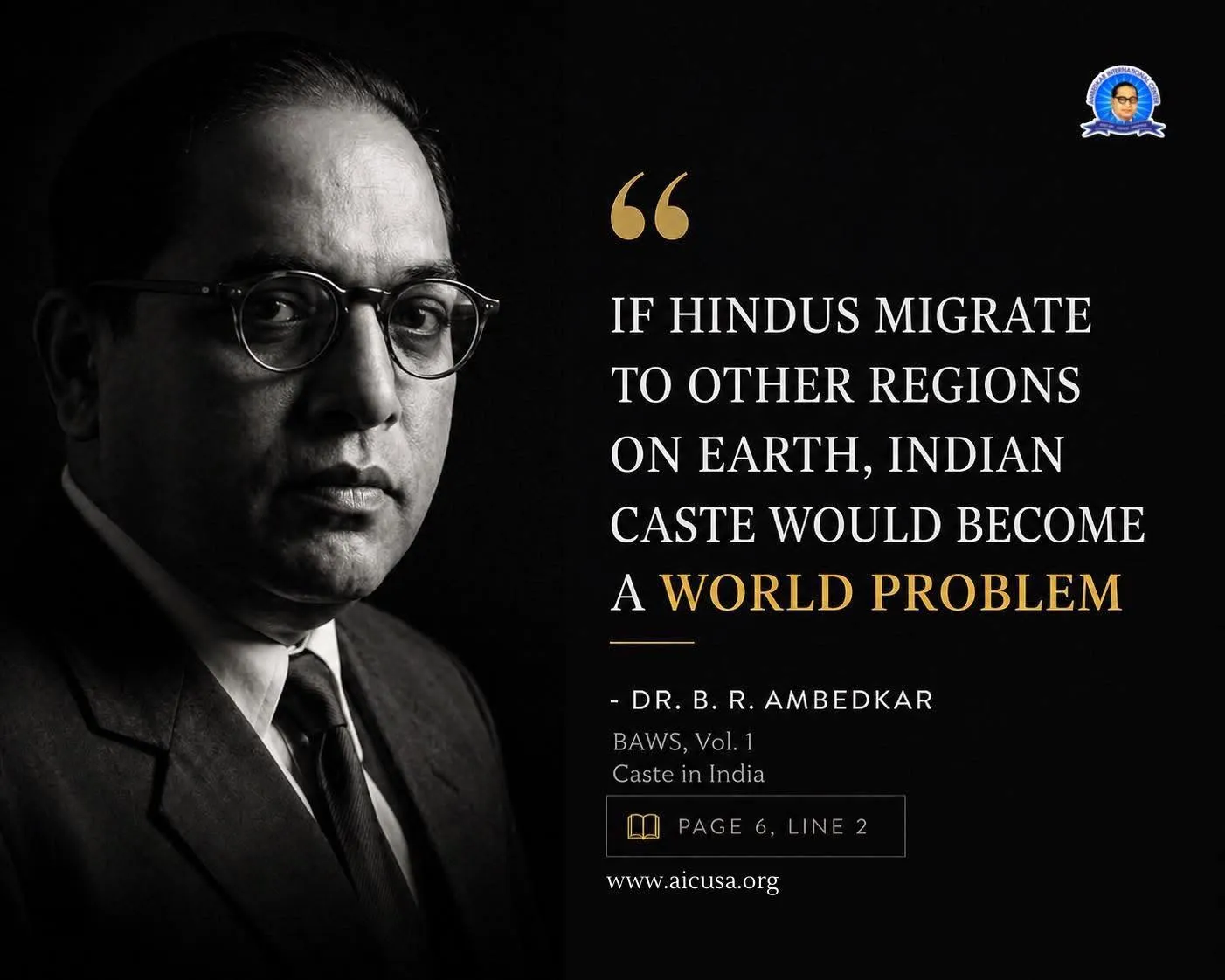
Imagine being told, before you can speak your first word, that your whole life is already decided. Your work, your education, your marriage and even who may touch you are all fixed by the family you were born into. For hundreds of millions of people in India, this is not imagination. It is the caste system, and it still shapes life there today.
I grew up in that culture, and I say this as someone who has seen it. The question every honest person must ask is: where does this come from?
What the Hindu scriptures say
Defenders often say caste is only a social distortion of a pure religion. But the scriptures themselves say otherwise.
The origin of the castes (Rig Veda 10.90.12). The Purusha Sukta describes the Brahmin coming from the mouth of the cosmic being, the Kshatriya from the arms, the Vaishya from the thighs and the Shudra from the feet. The hierarchy is built into the story of creation: mouth at the top and feet at the bottom.
Krishna claims to be the author (Bhagavad Gita 4.13). Krishna says the four varnas were created by him. Hindus who say caste was invented by men have to explain this verse. If the god of the Gita says he made the system, then the system is not a human accident.
Duty by birth (Bhagavad Gita 18.41-48). The Gita assigns each varna its duty, and the duty of the shudra is service (18.44). It also says it is better to do your own duty imperfectly than someone else’s well (18.47), which tells a person born into a low position to stay there.
Rebirth into a low caste as punishment (Chandogya Upanishad 5.10.7). Those with good conduct are born as a Brahmin, Kshatriya or Vaishya, and those with bad conduct are born as a dog, a pig or an outcaste. A human being is placed in the same sentence as a dog and a pig.
Cruelty written into law (Manusmriti 8.270-272). The Manusmriti prescribes humiliating and brutal punishments for a Shudra who insults a higher caste, and in 8.272, hot oil poured into the mouth and ears of a Shudra who presumes to teach a Brahmin.
Combine this with the doctrine of karma, and the injustice looks justified. If your low birth is the result of your past life, then your suffering is deserved, and nobody is obliged to help you.
The living result
This is not ancient history. In modern India, Dalits (formerly called “untouchables”) still face discrimination in education, jobs, marriage, temple entry and even access to water. The work of manual scavenging, cleaning sewers and handling human waste, falls overwhelmingly on Dalits, even though the practice has been illegal for years. The Indian government’s own surveys keep recording this pattern. A system that sorts people by birth produces exactly these results.
What the Bible says
Now compare the Bible. Scripture does not rank people by birth, because it starts from a different creation story.
Every person bears God’s image. “So God created man in his own image, in the image of God created he him; male and female created he them.” (Genesis 1:27) There is no mouth-and-feet order here. Everyone came from the same Creator, and everyone carries His image.
One blood. “And hath made of one blood all nations of men for to dwell on all the face of the earth.” (Acts 17:26)
God shows no favoritism. “Of a truth I perceive that God is no respecter of persons: but in every nation he that feareth him, and worketh righteousness, is accepted with him.” (Acts 10:34-35)
In Christ the dividing lines fall. “There is neither Jew nor Greek, there is neither bond nor free, there is neither male nor female: for ye are all one in Christ Jesus.” (Galatians 3:28) And again: “Where there is neither Greek nor Jew… barbarian, Scythian, bondman nor freeman: but Christ is all, and in all.” (Colossians 3:11)
The poor are not despised. “The rich and poor meet together: the LORD is the maker of them all.” (Proverbs 22:2) James rebukes the church for giving the best seat to the rich man and the poor man a place on the floor: “If ye have respect to persons, ye commit sin.” (James 2:1-9)
God looks at the heart, not birth. “Man looketh on the outward appearance, but the LORD looketh on the heart.” (1 Samuel 16:7)
Heaven itself is without caste. John sees “a great multitude, which no man could number, of all nations, and kindreds, and people, and tongues, standing before the throne.” (Revelation 7:9)
Jesus lived it
Jesus did not only teach equality, He acted on it in ways that shocked His culture. He touched lepers, whom everyone avoided (Mark 1:41). He spoke with a Samaritan woman, someone a respectable Jewish teacher was expected to ignore (John 4). He called a despised tax collector to be one of His closest followers (Matthew 9:9). He made a Samaritan the hero of His story about loving your neighbor (Luke 10:25-37). Instead of keeping away from the outcast, He went to them.
He also washed the feet of His disciples (John 13:5), doing the work of the lowest servant, the very place the Rig Veda assigns to the Shudra. The Lord of everything knelt down in it.
An honest answer to the obvious question
Critics will say Christians in the West have done wrong too, and that is true. Some used the Bible to defend slavery and segregation. But look at what happened next. The people who fought to end slavery, such as William Wilberforce, and the leaders of the civil rights movement appealed to the same Scripture, because the Bible’s teaching of equal human dignity condemned the practice. When Christians did wrong, they were disobeying their book. When the caste system oppresses, it is following its book. That is the difference, and it is why the argument matters.
We should also be honest that caste prejudice has crept into some Indian churches, where it doesn’t belong. It is a sin, and Scripture condemns it in the strongest terms.
The answer for the oppressed
For anyone told they were born to serve, that their birth was a punishment or that they are unclean, the message of Jesus is a different one. You were made in God’s image. You are not a debt to be paid off from a past life. Christ died for you, and in Him you are a child of God, with the same standing as any person on earth.
“But as many as received him, to them gave he power to become the sons of God, even to them that believe on his name.” (John 1:12)
No caste, birth or past stands between you and Him.
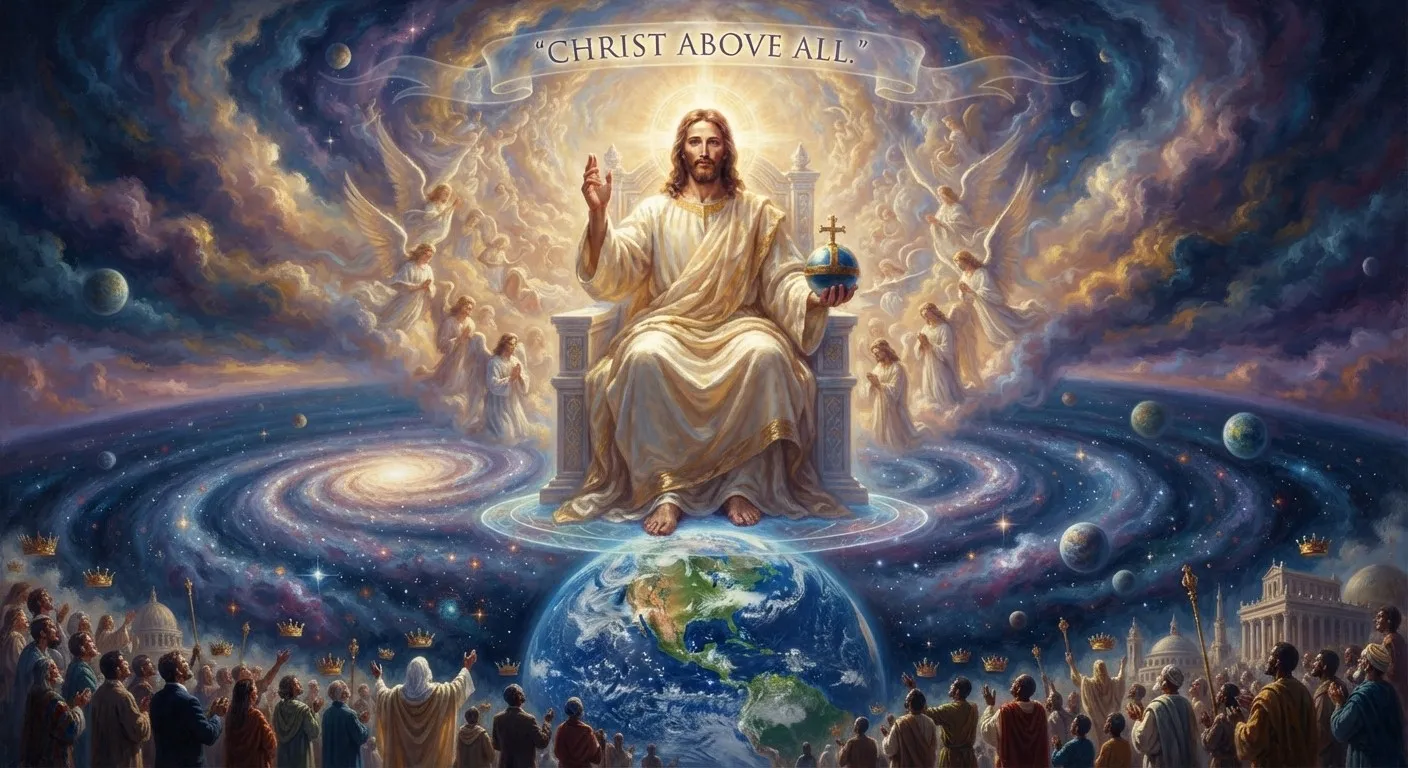
Glory to Jesus Christ, who breaks every chain and makes all people one in Him.