“Thou shalt have no other gods before me. Thou shalt not make unto thee any graven image… thou shalt not bow down thyself to them, nor serve them.” (Exodus 20:3-5)
Every generation faces the same test: will we bow to what people have made, or stay loyal to the God who made us? The book of Daniel shows what it looks like to choose God when the whole world is bowing to something else.
The Golden Statue
King Nebuchadnezzar built a huge image of gold, about ninety feet high, and set it up on the plain of Dura (Daniel 3:1). Everyone was commanded to fall down and worship it when the music played, and anyone who refused would be thrown into a burning fiery furnace (Daniel 3:4-6).
The music played and the crowd bowed. Three men stayed standing: Shadrach, Meshach and Abednego, the Hebrew friends of Daniel. They were reported to the king, who flew into a rage and gave them one more chance (Daniel 3:13-15).
Their answer is one of the boldest in Scripture:
“Our God whom we serve is able to deliver us from the burning fiery furnace… But if not, be it known unto thee, O king, that we will not serve thy gods, nor worship the golden image which thou hast set up.” (Daniel 3:17-18)
They did not say “God will rescue us.” They said God is able, and that even if He chose not to, they would still not bow. Their faith did not depend on the outcome.
God Walked With Them in the Fire
The furnace was heated seven times hotter, and the soldiers who threw the men in were killed by the flames (Daniel 3:19-22). Then the king jumped up in astonishment:
“Did not we cast three men bound into the midst of the fire?… Lo, I see four men loose, walking in the midst of the fire, and they have no hurt; and the form of the fourth is like the Son of God.” (Daniel 3:24-25)
When they came out, their clothes were not burned, not a hair was singed, and there was no smell of fire on them (Daniel 3:27). The king himself praised the God who sent His angel and delivered His servants (Daniel 3:28).
Daniel in the Lions’ Den
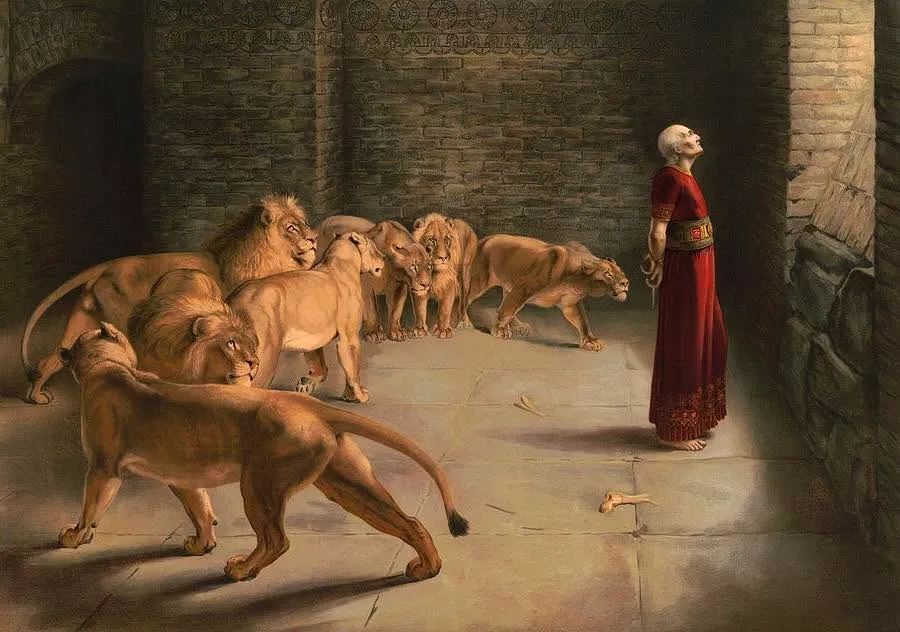
Later, Daniel’s enemies tricked King Darius into signing a decree: for thirty days, no one could pray to any god or man except the king (Daniel 6:7-9). Daniel knew about the decree. He went home, opened his windows toward Jerusalem, and prayed three times a day, just as he always had (Daniel 6:10).
He was thrown into the den of lions. The king, who was deeply troubled, could only say, “Thy God whom thou servest continually, he will deliver thee” (Daniel 6:16).
At dawn the king rushed to the den, and Daniel answered:
“My God hath sent his angel, and hath shut the lions’ mouths, that they have not hurt me.” (Daniel 6:22)
Scripture says no harm was found on him “because he believed in his God” (Daniel 6:23). The men who plotted against him met the fate they had planned for Daniel, and Darius ordered everyone in his kingdom to fear the God of Daniel, “for he is the living God” (Daniel 6:26).
Why Idols Fail
The Bible is plain about what idols are:
- They cannot speak, see, hear or move. “They have mouths, but they speak not: eyes have they, but they see not… They that make them are like unto them; so is every one that trusteth in them.” (Psalm 115:4-8)
- They are made by human hands. Isaiah 44:9-20 describes a man who cuts down a tree, burns half of it for warmth, and carves the other half into a god to pray to.
- They cannot save. The golden statue could not stop three men from walking out of the fire, and no idol could shut a lion’s mouth.
What This Means for Us
Most of us will never face a furnace or a lions’ den, but the call is the same: “Little children, keep yourselves from idols.” (1 John 5:21) “Wherefore, my dearly beloved, flee from idolatry.” (1 Corinthians 10:14)
Shadrach, Meshach, Abednego and Daniel did not bow, did not compromise and did not hide their faith, even when it cost them everything. God honored them, because the living God does not abandon those who stand for Him.
The crowd bowed to gold. Four men stood for God, and He stood with them.