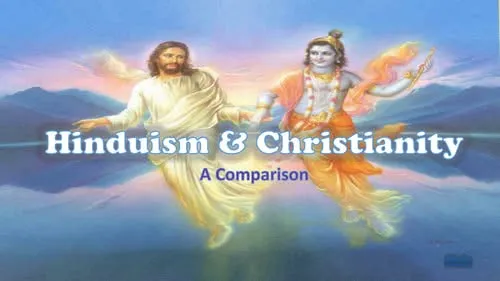
I was raised in a Hindu family, and I know the questions family members ask when someone leaves: Why leave the religion of your ancestors? Why choose a faith from the West? I’m not writing to mock anyone, because I love the people I grew up with. I’m writing because I found something truer, and I want to compare the two honestly.
1. A guru is not God
In Hindu teaching, the guru holds an extraordinary place. Texts such as the Advayataraka Upanishad and the Hatha Yoga Pradipika describe the guru’s favor as the key that awakens kundalini, and the tradition often treats the guru as equal to Brahman, the ultimate reality. Your liberation then depends on the grace of a man.
The Bible says a preacher is a servant, not a savior. No pastor can forgive your sins, and no teacher’s favor counts toward your salvation.
“For by grace are ye saved through faith; and that not of yourselves: it is the gift of God: not of works, lest any man should boast.” (Ephesians 2:8-9)
“But God commendeth his love toward us, in that, while we were yet sinners, Christ died for us.” (Romans 5:8)
Salvation does not come through a human intermediary or through your effort. It is a gift from God Himself.
2. The gods themselves were sinners
The Puranas, Hinduism’s sacred stories, show gods who curse each other, quarrel and act in ways we would call immoral in any human being. In the Shiva Purana, Brahma and Vishnu fight over which of them is greater. Other stories involve Shiva in scandalous episodes that cause disaster for the world. Many Hindus read these stories as allegory or divine play (lila), but the texts are what they are.
Think about what that means. A god who sins, curses and loses his temper is not holy, and he cannot show you what holiness is. How could he save you from sin when he is struggling with it himself?
Jesus is different. Even His enemies could not find a charge that stuck.
“He did no violence, neither was any deceit in his mouth.” (Isaiah 53:9)
“Who did no sin, neither was guile found in his mouth.” (1 Peter 2:22)
“For he hath made him to be sin for us, who knew no sin; that we might be made the righteousness of God in him.” (2 Corinthians 5:21)
The only one who is sinless is the only one who can take your sin away.
3. Karma has no mercy, but grace does
Karma says that whatever happens to you now is the result of what you did before. A person born blind or deaf, or suffering a terrible illness, is told it is the consequence of sins in a past life. Texts such as the Manusmriti and the Upanishads draw exactly this connection. Nobody escapes the system, not even the gods, so the cycle of rebirth has no clear end and no one to forgive you.
Think about what that does to the sufferer. A child in pain is told they deserve it. That is not comfort, it is a sentence.
When the disciples met a man born blind, they asked the same question: “Who did sin, this man, or his parents, that he was born blind?” Jesus answered:
“Neither hath this man sinned, nor his parents: but that the works of God should be made manifest in him.” (John 9:2-3)
Jesus rejected the idea that suffering is always payment for sin. Christianity does teach that we reap what we sow (Galatians 6:7), but it has no wheel of endless rebirth, and it offers something karma cannot:
“If we confess our sins, he is faithful and just to forgive us our sins, and to cleanse us from all unrighteousness.” (1 John 1:9)
“In whom we have redemption through his blood, the forgiveness of sins, according to the riches of his grace.” (Ephesians 1:7)
Karma says you must pay. Jesus says the debt is already paid, and He is the one who paid it.
4. The record of history
Hinduism is often called the oldest religion, but the written evidence does not support it:
- The Vedas are traditionally dated very early, but that dating rests on oral tradition. The oldest surviving manuscripts of the Vedas are medieval.
- Early inscriptions in India appear from the 3rd century BC onward, and the great stone temples come centuries after the time of Christ.
The New Testament has one of the strongest records of any ancient writing:
- The oldest surviving fragment, Papyrus 52 (part of John’s Gospel), dates to about a century after Jesus.
- By the 4th century, complete Bibles such as Codex Sinaiticus and Codex Vaticanus survive.
- The New Testament was written in Greek, one of the longest continuously recorded languages in the world.
We have thousands of manuscripts, copied within living memory of the events they describe. This is a claim about a real man who lived in a real place under named rulers, and it can be tested.
The Choice Before Us
Hinduism asks you to carry the weight of your past lives, depend on a guru’s favor and worship gods who struggled with the same sins you do. Jesus Christ asks you to come as you are. He lived the sinless life you could not live, died the death you deserved, rose again, and offers forgiveness as a gift.
I did not leave a religion because it was old. I left because I found the One who is true. Glory to Jesus Christ, the Lord who saves by grace.