The story of a missionary, a mob and a widow who answered hatred with the gospel
Some stories are so dark that it is hard to believe they happened. This is one of them. It is also a story of something so unexpected that it made a nation stop and look.
A man who served lepers
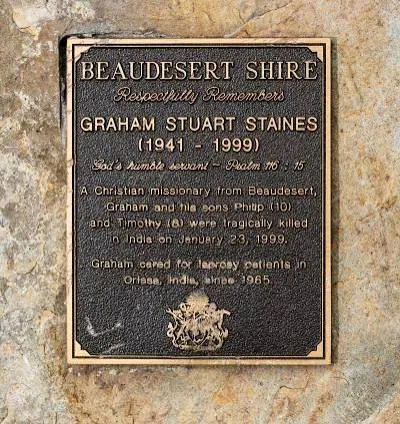
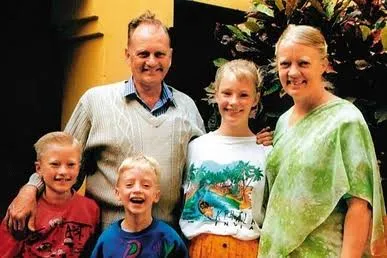
Graham Staines was an Australian missionary who first went to India in 1965. He joined the Evangelical Missionary Society of Mayurbhanj and spent about 34 years in the state of Odisha, caring for people with leprosy and serving tribal communities. He helped establish the Mayurbhanj Leprosy Home as a registered society in 1982. He learned to speak Odia fluently and helped translate part of the Bible into the Ho language.
Leprosy was one of the most feared and stigmatized diseases in India, and the people who had it were cast out of their villages. Staines went to them. He cleaned their wounds, fed them and gave them a place to belong. Jesus did the same when He “put forth his hand, and touched” a leper (Mark 1:41).
The night of 22 January 1999
On the night of 22-23 January 1999, Staines, then 58, was sleeping in his station wagon in front of a church in the village of Manoharpur, in Keonjhar district, with his sons Philip, aged ten, and Timothy, aged six. He was there for a jungle camp that Christians of the area gathered at each year.
A mob attacked the vehicle and set it on fire. The three were trapped inside and burned to death.
The mob was led by Dara Singh, whose real name is Rabindra Kumar Pal, who was described as a local leader with alleged links to the Bajrang Dal. According to the Wadhwa Commission, which the government appointed to investigate, as summarized by one commentator, he had spread the claim that the pastor was doing conversion work and was a threat to Hinduism. The commission found that Staines had in fact been serving leprosy patients and had not been engaged in conversion work.
What the courts decided
- 2003: A trial court in Bhubaneswar sentenced Dara Singh to death.
- 2005: The Orissa High Court reduced the sentence to life imprisonment.
- 2011: The Supreme Court upheld the life sentence. Another accused, Mahendra Hembram, also received life imprisonment, while eleven others were acquitted for lack of evidence.
The 2011 ruling also caused a controversy. The Supreme Court’s original 76-page judgment said the killings were meant to teach Staines a lesson about his religious activities, and included remarks criticizing conversion. Indian Christians objected that this seemed to excuse vigilante violence, and within days the court removed that language.
A fair note about who was responsible
It is important to say plainly what is known and what is disputed.
- Known: Dara Singh led the mob and was convicted. He is described in reports as a Bajrang Dal worker, and the Wadhwa Commission reportedly found that he received help from other Hindu groups.
- Disputed: At the time, the then Home Minister L.K. Advani said that the Bajrang Dal had nothing to do with the killing. The report as summarized does not say that the commission blamed the Sangh Parivar as an organization.
- Also true: The Prime Minister at the time, Atal Bihari Vajpayee of the BJP, condemned the attack.
So the honest summary is this: the man who led the killing had ties to a Hindutva group, and the poisonous idea that missionaries were converting people by fraud was what drove the mob. Whether any organization’s leadership planned it is not something the evidence shows, and this post does not claim that.
The widow
What happened next made the story known around the world. Staines’s widow, Gladys, did not call for revenge. She publicly forgave the men who had killed her husband and two sons.
In a statement to the commission, she wrote that it was “far from my mind to punish” those responsible. She hoped that they would repent and be reformed. She also denied the claim that her husband had forced anyone to convert.
She did not leave India at once. She stayed and continued the work with leprosy patients for several years before returning to Australia in 2004. She was awarded India’s Padma Shri in 2005, and in 2016 the Mother Teresa Memorial International Award for Social Justice.
An older Christian principle was being lived out, and many Indians, whatever their religion, understood what they were seeing. Jesus had said:
“But I say unto you, Love your enemies, bless them that curse you, do good to them that hate you, and pray for them which despitefully use you, and persecute you.” (Matthew 5:44)
And from the cross:
“Father, forgive them; for they know not what they do.” (Luke 23:34)
The first martyr, Stephen, echoed it as the stones struck him:
“Lord, lay not this sin to their charge.” (Acts 7:60)
Why forgiveness is not weakness
It would be easy to misread what Gladys did. Forgiveness does not mean that the crime was acceptable, or that justice does not matter. Dara Singh was tried, convicted and imprisoned, and Christians in India, like everyone else, believe that murder must be answered by law.
Forgiveness means something else. It means refusing to let hatred have the last word.
“Dearly beloved, avenge not yourselves, but rather give place unto wrath: for it is written, Vengeance is mine; I will repay, saith the Lord.” (Romans 12:19)
“Be not overcome of evil, but overcome evil with good.” (Romans 12:21)
“And be ye kind one to another, tenderhearted, forgiving one another, even as God for Christ’s sake hath forgiven you.” (Ephesians 4:32)
The key phrase is the last one: even as God for Christ’s sake hath forgiven you. Christians forgive because they have been forgiven. We were all enemies of God, and Christ died for us anyway (Romans 5:8, 10). Gladys Staines could offer what she had received.
Where the case stands now
The story is not finished. Dara Singh has asked for early release, saying he has served about 24 to 25 years. As of the latest reports I found, Odisha’s State Sentence Review Board met on 31 August 2026 and declined to recommend his release at this stage. Reports say the state cited the possibility of communal disturbance, and a district report mentioned supporters gathering outside the jail on 15 August. On 17 September 2026, the Supreme Court gave him time to amend his petition and challenge the state’s decision, and the matter is still pending.
Whatever the courts decide, Christians have a clear way to respond: pray for justice, pray for peace and pray for the man himself, that he would come to know the One whom the Staines family served.
What this story says to Hindu readers
If you are a Hindu reading this, I want to say something directly. Most Hindus are not like the men in that mob, and many were horrified by what was done in Manoharpur. I do not ask you to carry their guilt.
I ask you to notice what the Staines family were doing: caring for people your own society had cast aside, and then, when the worst happened, offering forgiveness instead of vengeance. The question to ask is where that kind of love comes from. It does not come from human nature, because human nature wants revenge. It comes from Jesus Christ.
“Greater love hath no man than this, that a man lay down his life for his friends.” (John 15:13)
“But God commendeth his love toward us, in that, while we were yet sinners, Christ died for us.” (Romans 5:8)
An invitation
If you are carrying a wound you cannot forgive, or a guilt you cannot remove, the God who gave Gladys Staines the strength to forgive can help you too. And if you have never known Him, you can come to Him now.
“That if thou shalt confess with thy mouth the Lord Jesus, and shalt believe in thine heart that God hath raised him from the dead, thou shalt be saved.” (Romans 10:9)
You can pray something like this:
“Lord Jesus, I admit that I have sinned and cannot save myself. I believe You died for me and rose again. Forgive me, and teach me to forgive others. Come into my life and be my Lord and Savior. Amen.”
If you prayed that, tell a Christian friend, find a Bible-believing church and begin reading the Gospel of John.
A mob burned a family alive, and a widow answered with the love of Christ. That love is stronger than any fire.
Glory to Jesus Christ, who forgave His killers and taught His people to do the same.
Sources
- Why India shouldn’t forget the Graham Staines murder, The Quint
- Dara Singh’s plea for release rejected by Odisha govt in Graham Staines murder; know all about the 1999 case, India TV News, Sept 15, 2026
- SC defers Dara Singh’s release plea hearing by 3 weeks, Odisha TV, Sept 17, 2026
- Supreme Court Gives Dara Singh Two Weeks to Challenge Rejection of Early Release Plea, NewsGram, Sept 18, 2026
- India confirms life term for murder of missionary, Arab News, Jan 21, 2011
- India’s Supreme Court changes ruling after protest by Christians, Baptist News Global, Jan 2011
- Graham Staines, Wikipedia
- Conversions and anti-Christian violence in India (Ram Puniyani on the Wadhwa Commission), SabrangIndia