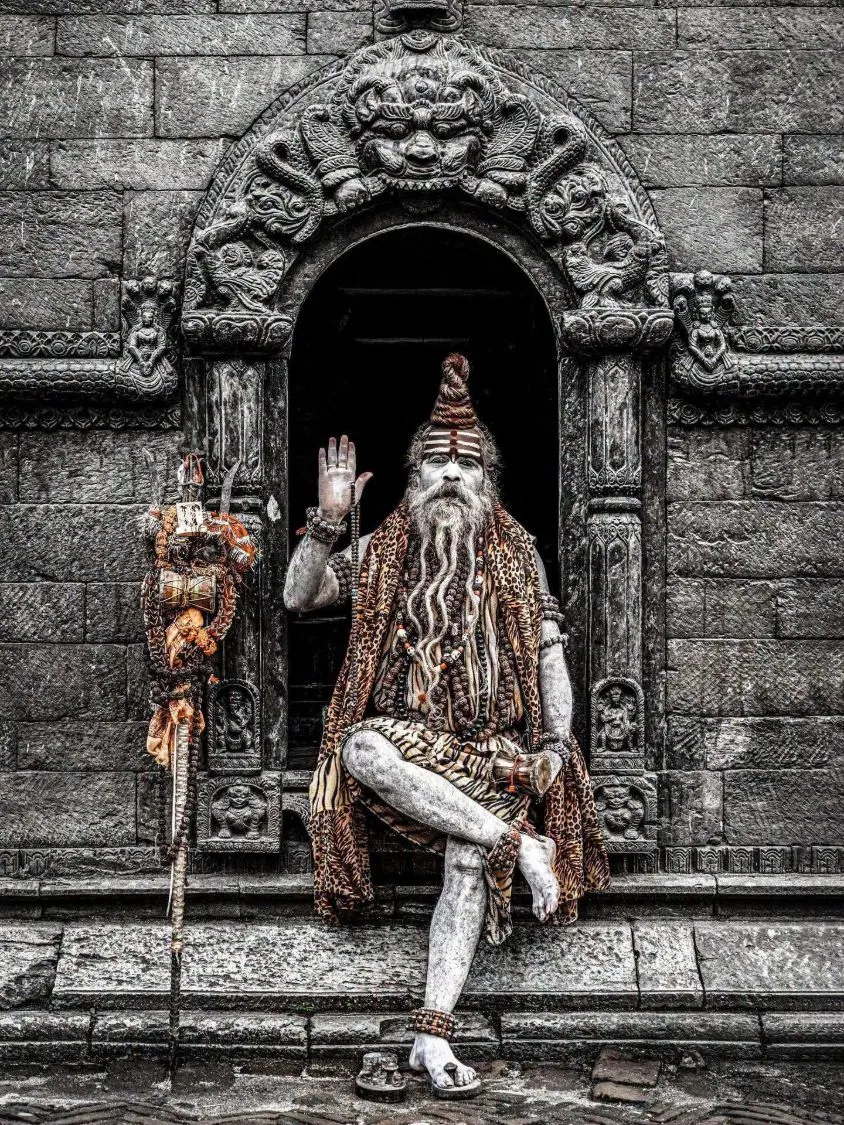
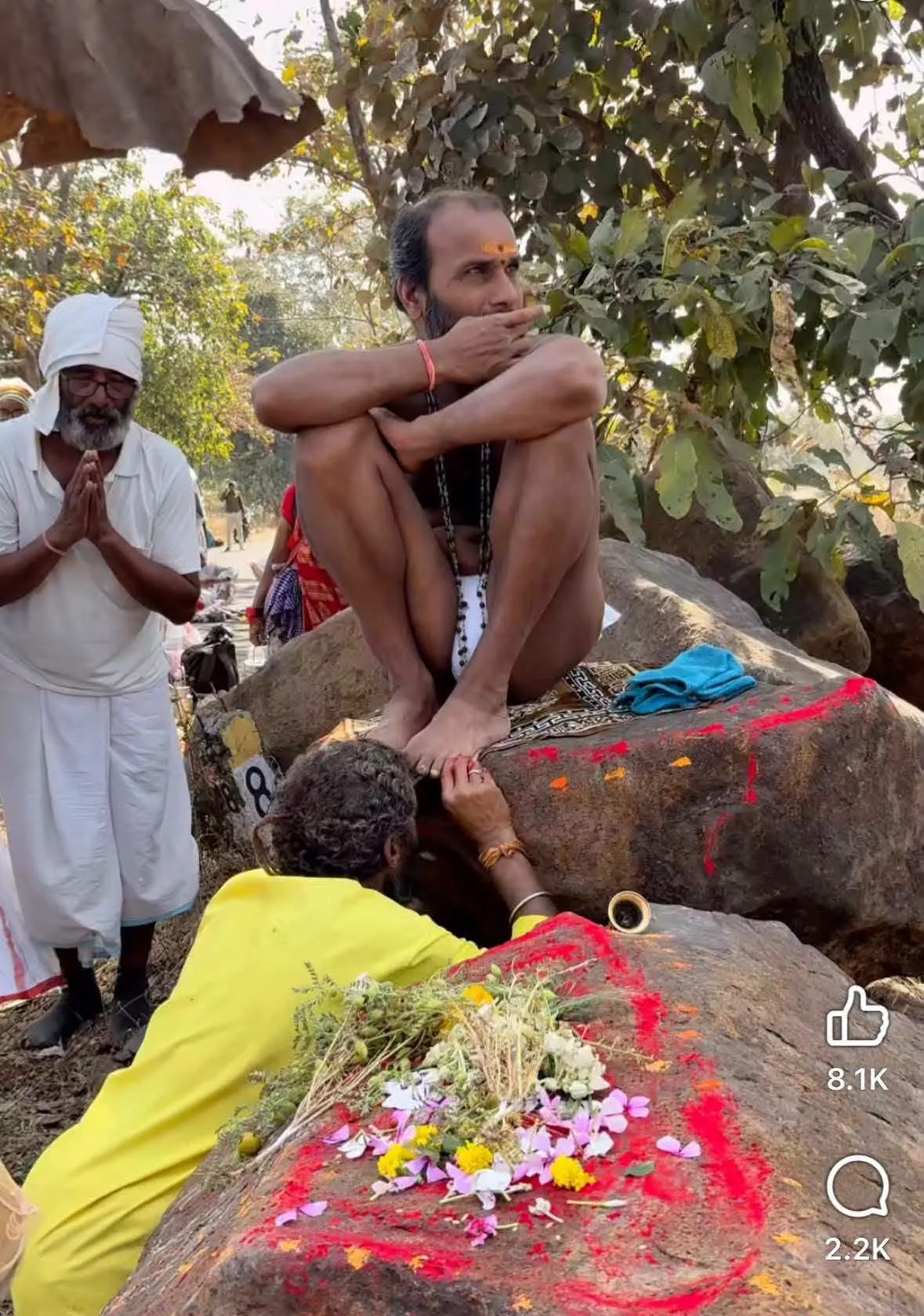
In many homes in India, the path to God runs through other people. There is the family priest who performs the ceremonies, the guru whose blessing is thought to unlock spiritual progress, and the rituals that must be done correctly and at the right time. A person who wants to reach God is told he cannot do it alone, and that there is always someone he must go through first.
I grew up with this, and I understand why it feels necessary. If God is great and holy, who are we to approach Him directly? The Bible answers this question in a way that surprises many people.
The place of the guru
In Hindu tradition, the guru holds an extraordinary position. A well-known verse, often recited in devotion to the teacher, says the guru is Brahma, Vishnu and Shiva, and is the supreme Brahman itself. Many traditions teach that a guru’s grace is the key to spiritual awakening, and that without one, liberation is out of reach.
I don’t say this to mock the guru or the student. Many gurus are sincere, and many students are looking for God with all their hearts. But consider what this teaching asks. It asks a person to place his eternal destiny in the hands of another human being, who is himself a sinner, mortal and imperfect. And the history of religious teachers around the world, including India, is full of cases where such trust was abused.
What the Bible says: one mediator
The Bible is clear that no human being can stand between us and God. It also says that we do not need one, because God has provided the One mediator we need.
“For there is one God, and one mediator between God and men, the man Christ Jesus; Who gave himself a ransom for all, to be testified in due time.” (1 Timothy 2:5-6)
One God, one mediator. Not many gurus, not a chain of priests, not a system of rituals. A mediator is someone who stands between two parties and brings them together, and Jesus is able to do that because He is both fully God and fully man. He can speak for us because He became one of us, and He can bring us to God because He is God.
Peter said the same in front of the very leaders who had Jesus put to death:
“Neither is there salvation in any other: for there is none other name under heaven given among men, whereby we must be saved.” (Acts 4:12)
And Jesus said it Himself:
“I am the way, the truth, and the life: no man cometh unto the Father, but by me.” (John 14:6)
The curtain was torn
To see how remarkable this is, think about the temple in Jerusalem. In the Old Testament, the temple had an inner room called the Holy of Holies, where God’s presence was said to dwell. It was hidden behind a thick curtain. Only the high priest could enter, only once a year, and only with the blood of a sacrifice (Leviticus 16; Hebrews 9:7). Ordinary people, however devout, could not go near.
Then Jesus died on the cross:
“And, behold, the veil of the temple was rent in twain from the top to the bottom; and the earth did quake, and the rocks rent.” (Matthew 27:51)
The curtain was torn from the top to the bottom, and that detail matters. It was torn from above, not by human hands. God Himself opened the way. The barrier between humanity and God was removed, and the cost was Jesus’ own body.
We can come boldly
The book of Hebrews explains what this means for us:
“Seeing then that we have a great high priest, that is passed into the heavens, Jesus the Son of God, let us hold fast our profession. For we have not an high priest which cannot be touched with the feeling of our infirmities; but was in all points tempted like as we are, yet without sin. Let us therefore come boldly unto the throne of grace, that we may obtain mercy, and find grace to help in time of need.” (Hebrews 4:14-16)
Look at the invitation: come boldly. Not come through an intermediary, not come after the right ritual, not wait for a guru’s permission. Come to a throne of grace and find mercy.
Jesus is our great high priest, the one who understands us, and He is able to help.
“Wherefore he is able also to save them to the uttermost that come unto God by him, seeing he ever liveth to make intercession for them.” (Hebrews 7:25)
Unlike earthly priests, who grow old and die, He lives forever, and His work for us is complete.
A word about Christian priests and pastors
It is fair to ask: don’t Christians have priests and pastors too? The Bible gives pastors and teachers to the church (Ephesians 4:11-12), but their role is to teach, serve and lead people to Christ, not to stand between us and God. Peter says every believer has direct access:
“But ye are a chosen generation, a royal priesthood, an holy nation, a peculiar people; that ye should shew forth the praises of him who hath called you out of darkness into his marvellous light.” (1 Peter 2:9)
If any church teaches that a human priest must forgive your sins or that salvation depends on his favor, it is going beyond what Scripture says. A pastor is a fellow servant, not a savior, and he would be the first to tell you so.
No ritual can save you
If a person needs no guru, what about rituals? Many religions teach that salvation comes by performing the right acts: pilgrimages, offerings, fasts, ceremonies and chants. They can be done with great devotion, but the Bible says they cannot remove sin:
“For by grace are ye saved through faith; and that not of yourselves: it is the gift of God: Not of works, lest any man should boast.” (Ephesians 2:8-9)
“Not by works of righteousness which we have done, but according to his mercy he saved us.” (Titus 3:5)
The Old Testament sacrifices pointed forward to something greater. Hebrews explains that they could never take away sins, and that Jesus offered Himself once for all (Hebrews 10:10-14). When something is finished, nothing needs to be added to it. On the cross, Jesus said, “It is finished.” (John 19:30)
This is good news for the person who has been told for years that he must do more, pay more and try harder. Salvation is not a ladder you climb. It is a gift you receive.
What this means for you
You do not need to travel to a holy site, find the right guru or perform the right ceremony. You do not need to be good enough first. You can speak to God right now, in your own words, wherever you are.
“The LORD is nigh unto all them that call upon him, to all that call upon him in truth.” (Psalm 145:18)
“For whosoever shall call upon the name of the Lord shall be saved.” (Romans 10:13)
An invitation
If you have been searching for a way to reach God, and you’ve felt that the path was closed unless you had the right person or the right ritual, I want you to know that the door has been opened by Jesus Himself.
“That if thou shalt confess with thy mouth the Lord Jesus, and shalt believe in thine heart that God hath raised him from the dead, thou shalt be saved.” (Romans 10:9)
You can pray something like this:
“Lord Jesus, I come to You directly. I admit that I have sinned and cannot save myself by any ritual or any teacher. I believe You died for me and rose again. Forgive me, come into my life and be my Lord and Savior. Amen.”
If you prayed that, tell a Christian friend, find a Bible-believing church where you can learn and grow, and begin reading the Gospel of John.
One God. One mediator. One way, and the curtain has been torn open.
Glory to Jesus Christ, our great High Priest.