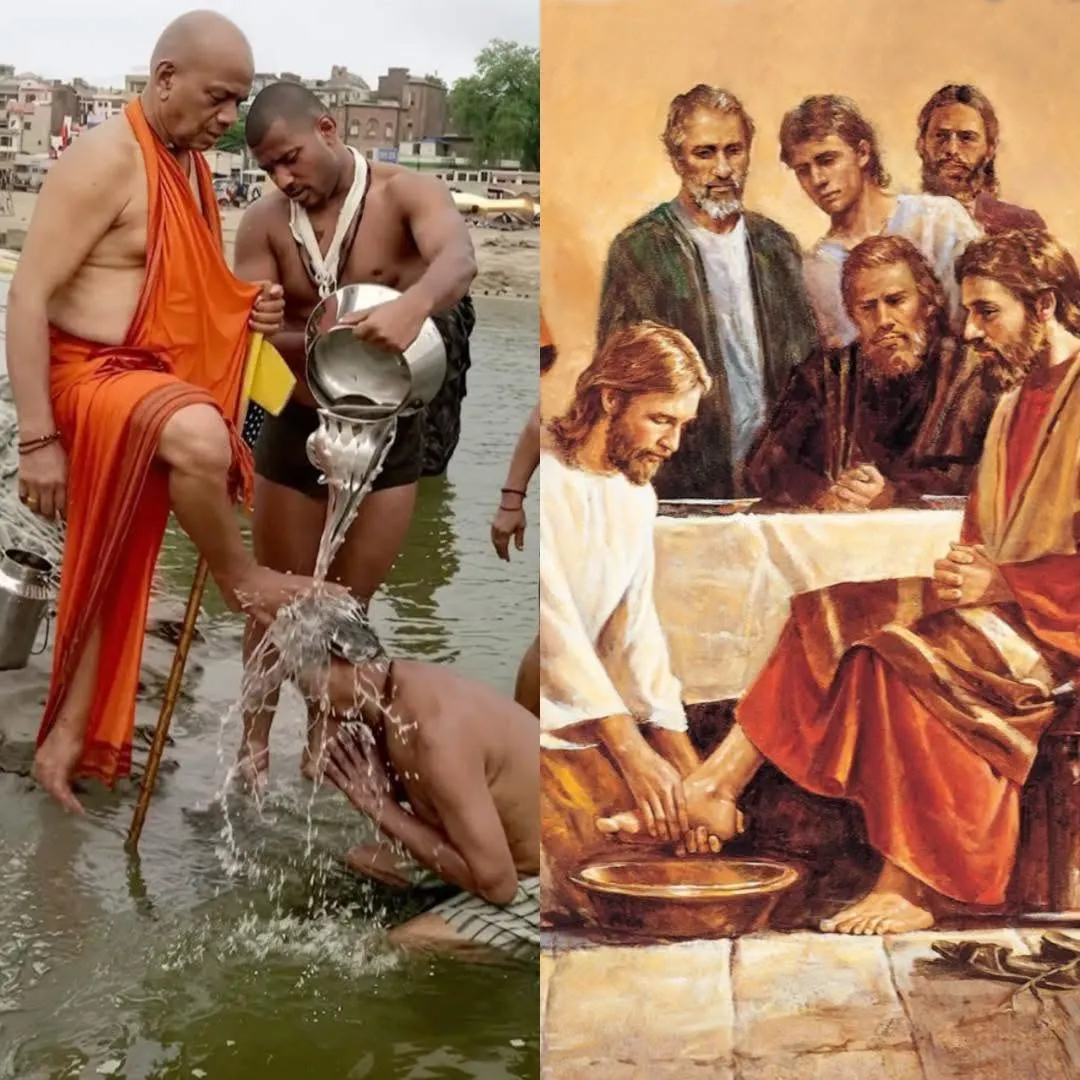
Imagine being told before you take your first breath that your place in the world is already fixed. Your work, your education, who you may marry and even whose water you may drink are decided by the family you were born into. For millions of people in India, this is not a thought experiment. It is daily life under the caste system, and it still shapes villages, jobs and marriages today.
I was raised in this culture, so I am not writing from a distance. I am writing because the system is false, and because the God who made us says something very different about every human being.
Where the caste system comes from
Defenders often say caste is only a social distortion of a pure religion. But the system is rooted in Hindu texts, and that is why it has lasted for thousands of years.
- Rig Veda 10.90.12. In the hymn of the cosmic being, the Brahmin comes from the mouth, the Kshatriya from the arms, the Vaishya from the thighs and the Shudra from the feet. Rank is placed into the story of creation itself.
- Bhagavad Gita 4.13. Krishna says the four varnas were created by him. If the god of the Gita claims to have made the system, then it was not just a human invention.
- Chandogya Upanishad 5.10.7. Good conduct leads to birth as a Brahmin, Kshatriya or Vaishya, and bad conduct to birth as a dog, a pig or an outcaste. People at the bottom are placed beside animals.
- Manusmriti 8.270-272. The law code prescribes cruel punishments for a Shudra who insults or presumes to teach a higher caste, including pouring hot oil into his mouth and ears (8.272).
Add the doctrine of karma to this, and the injustice is made to look fair. If your low birth is the result of your past life, then your suffering is deserved, and nobody is obliged to help you. A child born into poverty is told it is a debt. That is not justice. It is a sentence passed before a person has done anything.
The living result
This is not ancient history. Dalits, formerly called “untouchables,” still face discrimination in education, work, marriage, access to temples and even access to water in parts of India. Manual scavenging, the cleaning of sewers and dry latrines by hand, falls overwhelmingly on Dalits even though the practice is illegal. Honor-based violence over inter-caste marriage still makes the news. A system that ranks human beings by birth produces exactly these outcomes, and it will keep producing them for as long as people believe in it.
To be fair, many Hindus oppose caste discrimination, and reformers, saints and activists have fought it for centuries. Dr. B.R. Ambedkar, who led the fight for Dalit rights, was born into the system and spent his life challenging it. My argument is that the system finds its support in the texts, and that the people who suffer deserve a better answer than “that’s your karma.”
The caste system is false because of how God made us
The Bible begins with a completely different story of human origin. There is no mouth and no feet. There is one Creator and one human family.
“So God created man in his own image, in the image of God created he him; male and female created he them.” (Genesis 1:27)
Every human being, regardless of birth, bears the image of God. That is the foundation of human dignity.
“And hath made of one blood all nations of men for to dwell on all the face of the earth.” (Acts 17:26)
We are one family descended from one origin.
“Have we not all one father? hath not one God created us?” (Malachi 2:10)
“The rich and poor meet together: the LORD is the maker of them all.” (Proverbs 22:2)
“He that oppresseth the poor reproacheth his Maker: but he that honoureth him hath mercy on the poor.” (Proverbs 14:31)
This last verse is worth pausing on. When you mistreat a human being, the Bible says you are insulting the One who made them.
God does not take sides
The caste system says some people are closer to God by birth. The Bible says God does not rank us.
“Then Peter opened his mouth, and said, Of a truth I perceive that God is no respecter of persons: But in every nation he that feareth him, and worketh righteousness, is accepted with him.” (Acts 10:34-35)
“For there is no respect of persons with God.” (Romans 2:11)
“But the LORD said unto Samuel, Look not on his countenance, or on the height of his stature… for the LORD seeth not as man seeth; for man looketh on the outward appearance, but the LORD looketh on the heart.” (1 Samuel 16:7)
God looks at the heart, not at a family name. James goes so far as to call favoritism a sin:
“But if ye have respect to persons, ye commit sin, and are convinced of the law as transgressors.” (James 2:9)
Jesus broke every barrier
Jesus did not only teach equality, He lived it, and it often shocked those watching.
- He touched a leper. In His day, lepers were outcasts, and no one touched them. Jesus “put forth his hand, and touched him” (Mark 1:41).
- He talked with a Samaritan woman. Jews were not supposed to speak with Samaritans, and certainly not with a woman of her reputation. He sat with her at a well and offered her living water (John 4).
- He called a tax collector to follow Him. Matthew was despised by his own people, and Jesus said, “Follow me” (Matthew 9:9).
- He made a Samaritan the hero of His story. In the parable of the Good Samaritan, the one who showed love was the outsider (Luke 10:25-37).
- He washed His disciples’ feet. The Lord of heaven and earth did the work of the lowest servant (John 13:3-5). The Rig Veda places the Shudra at the feet, but Jesus knelt down there and served.
Jesus died for everyone
The cross is the greatest proof that no one is lower than anyone else. The price of redemption was the same for every person who has ever lived.
“For God so loved the world, that he gave his only begotten Son, that whosoever believeth in him should not perish, but have everlasting life.” (John 3:16)
The word is whosoever. Not whoever is born into the right family, and not whoever has earned enough merit in a past life.
“But God commendeth his love toward us, in that, while we were yet sinners, Christ died for us.” (Romans 5:8)
“For there is no difference: for all have sinned, and come short of the glory of God; Being justified freely by his grace through the redemption that is in Christ Jesus.” (Romans 3:22-24)
There is no difference. All of us have sinned, and all of us are offered the same grace freely. A king and a street sweeper stand at the same cross, with the same need and the same invitation.
In Christ, the dividing lines fall:
“There is neither Jew nor Greek, there is neither bond nor free, there is neither male nor female: for ye are all one in Christ Jesus.” (Galatians 3:28)
And in heaven, there is no caste either. John saw “a great multitude, which no man could number, of all nations, and kindreds, and people, and tongues, standing before the throne and before the Lamb.” (Revelation 7:9)
A word to those who were told they were low
If you have been called unclean, if you were told you were born to serve, or that your suffering is the payment of an old debt, hear this: it is a lie.
You were made in the image of God. You were known before you were born (Psalm 139:13-14). You are not a punishment. Christ died for you, and He calls you a son or daughter of God.
“But as many as received him, to them gave he power to become the sons of God, even to them that believe on his name.” (John 1:12)
No caste, birth or history can stand between you and Him.
A word to those who have benefited from the system
If you were born into a high caste, I’m not asking you to hate where you come from. I’m asking you to look honestly at what has been done to others in the name of religion. Jesus told us what the Lord requires:
“He hath shewed thee, O man, what is good; and what doth the LORD require of thee, but to do justly, and to love mercy, and to walk humbly with thy God?” (Micah 6:8)
Honor every person as someone made in God’s image.
An invitation
Maybe you have lived under this weight your whole life, or you have watched others carry it. You do not need a priest, a caste or a past life to come to God. You can come right now.
“That if thou shalt confess with thy mouth the Lord Jesus, and shalt believe in thine heart that God hath raised him from the dead, thou shalt be saved. For whosoever shall call upon the name of the Lord shall be saved.” (Romans 10:9, 13)
You can pray something like this:
“Lord Jesus, I admit that I have sinned and that I can’t save myself. I believe You died on the cross for me and rose again. Thank You that I am made in Your image and loved by You. Forgive me, come into my life and be my Lord and Savior. Amen.”
If you prayed that, tell a Christian friend or find a Bible-believing church that welcomes every person equally, and begin reading the Gospel of John.
There is no high and low before the Cross. One Creator, one human family, and one Savior for all.
Glory to Jesus Christ, who died for everyone.