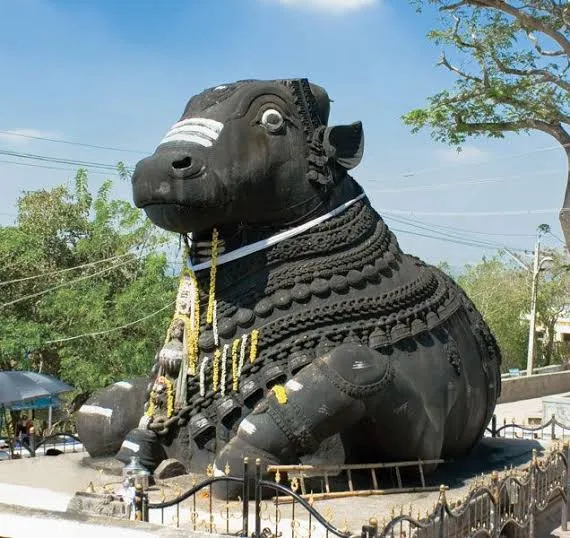
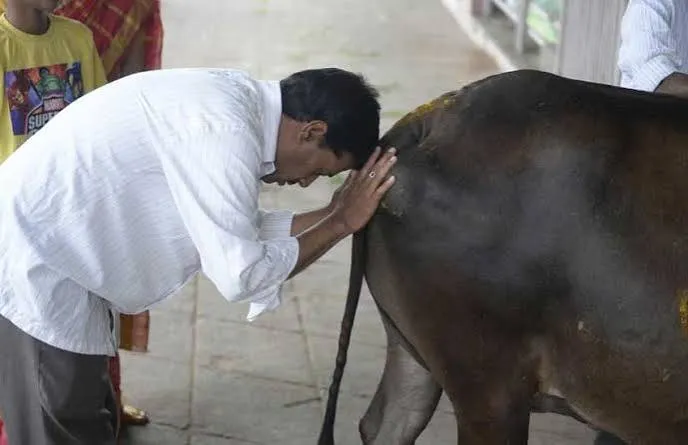
I’m in India right now, and I’m seeing people bow down to cows. A man touches a cow’s back and then touches his own forehead. A woman puts garlands and red powder on one and offers it food before she eats herself. Cows wander the streets, and traffic stops for them.
I’m not writing this to mock anyone. These are sincere, kind people, and I was raised among them. But I can’t stay quiet, because Scripture addresses exactly this, and it did so thousands of years ago at the foot of a mountain.
What I’m seeing
Many Hindus call the cow gau mata, “mother cow.” Some say it holds many gods within it, and in Hindu tradition it is considered sacred, to be protected and honored. Hindus would say they are not worshipping an animal the way someone worships an idol, but showing reverence to a symbol of life, nourishment and gentleness. I’ll let them describe their own beliefs, and I’m not going to caricature them.
But whatever the intention, the act is bowing, offering, praying and honoring a created animal with religious devotion. The Bible has a name for that.
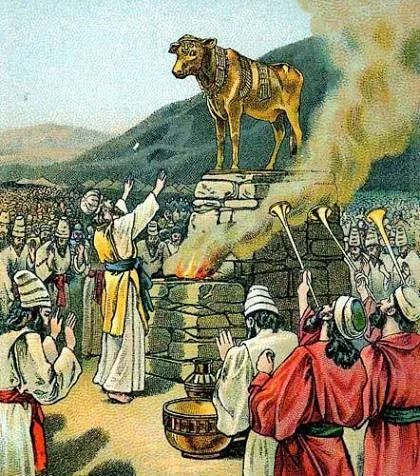
The first golden calf
When Moses went up Mount Sinai to receive God’s law, the people grew impatient. They said to Aaron, “Up, make us gods, which shall go before us.” (Exodus 32:1) Aaron took their gold, shaped it into a calf and said:
“These be thy gods, O Israel, which brought thee up out of the land of Egypt.” (Exodus 32:4)
Notice what happened next. Aaron built an altar and announced, “To morrow is a feast to the LORD.” (Exodus 32:5) The people did not think they were abandoning the Lord. They thought they were worshipping the true God through an image, and that is exactly how the Bible defines idolatry. The people offered sacrifices, then “sat down to eat and drink, and rose up to play.” (Exodus 32:6)
Remember what had just happened. Only weeks earlier, God had parted the sea and drowned Pharaoh’s army. He had fed them with bread from heaven. He had just spoken the Ten Commandments, including:
“Thou shalt not make unto thee any graven image… Thou shalt not bow down thyself to them, nor serve them: for I the LORD thy God am a jealous God.” (Exodus 20:4-5)
The people broke this within days of hearing it.
Why it was so serious
Psalm 106 describes the event with a heartbreaking line:
“They made a calf in Horeb, and worshipped the molten image. Thus they changed their glory into the similitude of an ox that eateth grass.” (Psalm 106:19-20)
They traded the glory of the living God for the image of an animal that eats grass. Paul uses the same language when he describes how humanity falls into idolatry:
“And changed the glory of the uncorruptible God into an image made like to corruptible man, and to birds, and fourfooted beasts, and creeping things.” (Romans 1:23)
It is a sin against love, not only against rules. God had rescued these people, and they credited their rescue to a statue. That is the core of the problem: the honor, thanks and worship that belong to the Creator are given to something He made.
Scholars have often noted that Israel had just left Egypt, where bull and cow figures such as Apis and Hathor were worshipped. The calf was likely a reflection of the culture they had lived in. That detail may be worth thinking about for anyone raised in a culture where the cow is revered, and it explains why the first commandments are so firm.
How God responded
God’s response is one of the most sobering scenes in the Bible, and it also shows His mercy.
His anger. God told Moses what was happening and said “they have corrupted themselves” and that they had “turned aside quickly out of the way which I commanded them.” (Exodus 32:7-8) He said He would destroy them and make a new nation from Moses (Exodus 32:10).
A man who stood in the gap. Moses pleaded for the people, reminding God of His promises (Exodus 32:11-13), and the Lord relented from the disaster He had said He would bring (Exodus 32:14). Later Moses went even further and asked to be blotted out of God’s book if that would save them (Exodus 32:32).
Judgment still came. When Moses came down and saw the dancing, he broke the stone tablets, burned the calf, ground it to powder, scattered it on the water and made the people drink it (Exodus 32:19-20). The calf they thought was a god was reduced to dust and swallowed. Then the Levites stepped forward to stand with the Lord, and about three thousand men fell that day (Exodus 32:26-28). A plague followed (Exodus 32:35).
Then mercy. God did not abandon them. He renewed the covenant with Moses and revealed Himself in these words:
“The LORD, The LORD God, merciful and gracious, longsuffering, and abundant in goodness and truth… forgiving iniquity and transgression and sin, and that will by no means clear the guilty.” (Exodus 34:6-7)
In the same moment, God shows He is truly merciful and truly just. He forgives, but He does not pretend that sin is small.
What the golden calf means for us
The question we should ask is this: if God took idolatry so seriously with His own people, who had just seen His miracles, what should we conclude about all idol worship today? A few truths stand out:
- Sincerity does not make it right. The Israelites were sincere. They were holding a “feast to the LORD.” The Bible still calls it sin, because how we worship matters to God, and He has told us what He wants (John 4:24).
- A creature cannot receive what belongs to the Creator. “I am the LORD: that is my name: and my glory will I not give to another, neither my praise to graven images.” (Isaiah 42:8)
- God is the one who gives life, not an animal. Psalm 50:10 says “every beast of the forest is mine, and the cattle upon a thousand hills.” The cow belongs to Him, and so does the milk and the field it grazes. He is the source we should thank.
- The call is clear. “Little children, keep yourselves from idols.” (1 John 5:21) “Wherefore, my dearly beloved, flee from idolatry.” (1 Corinthians 10:14) And Paul warns, using the very story of the calf: “Neither be ye idolaters, as were some of them.” (1 Corinthians 10:7)
The same mercy is open today
What gives me hope, even as I watch people bow in the street, is how the story ended. The God who was angry at the golden calf is the God who forgave His people, kept His promise and eventually sent His Son. Idolatry is serious, but it is not unforgivable. Every person bowing to a cow today can turn to the Lord, as the Thessalonians did:
“Ye turned to God from idols to serve the living and true God.” (1 Thessalonians 1:9)
“Let the wicked forsake his way, and the unrighteous man his thoughts: and let him return unto the LORD, and he will have mercy upon him; and to our God, for he will abundantly pardon.” (Isaiah 55:7)
Jesus Christ is the way back. He bore the judgment that idolatry deserves so that we could be forgiven and brought into the family of God.
I’m still here in India, still watching people bow. And my prayer is not that they would be mocked, but that they would see the one true God who loves them and calls them by name.
Glory to Jesus Christ, the only living God, who alone is worthy of our worship.